
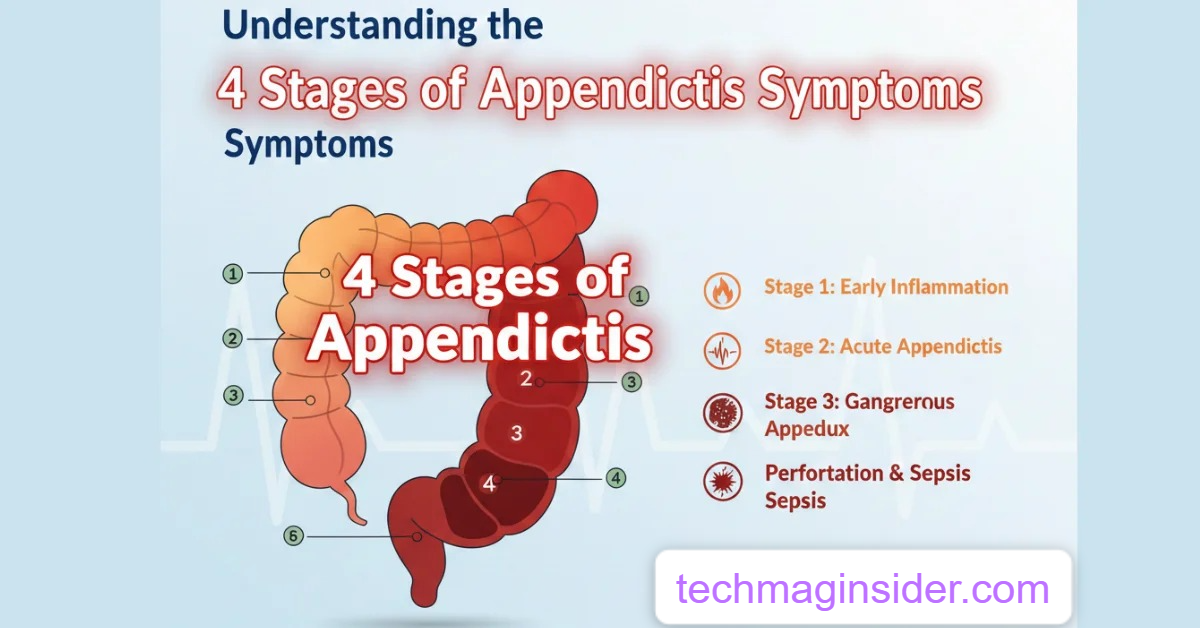
Appendicitis progresses in four stages: early (mild inflammation), acute (severe pain), ruptured (life-threatening perforation), and chronic (recurrent episodes). Early detection is crucial to prevent serious complications such as infection, organ damage, or sepsis. Recognizing symptoms like abdominal pain, nausea, and mild fever at the first stage can save lives. Prompt medical attention significantly improves recovery and reduces hospital stay.
What Is Appendicitis?
Appendicitis is the inflammation of the appendix, a small, finger-shaped pouch in the lower right abdomen. It can occur at any age but is most common in teenagers and young adults. The condition can start subtly and worsen quickly if left untreated. Understanding appendicitis, its causes, and the warning signs is crucial because delayed treatment can lead to life-threatening complications such as rupture or widespread infection. Knowledge of the four stages of appendicitis helps individuals act promptly, preventing emergencies.
Causes and Risk Factors
Appendicitis usually occurs when the appendix becomes blocked by stool, foreign bodies, or infection. This blockage leads to swelling, bacterial growth, and increased pressure. Risk factors include age (most common in 10–30 years), family history, and gastrointestinal infections. Poor diet and low fiber intake may increase the likelihood of appendicitis. Understanding these triggers helps people recognize who might be at higher risk. Being aware of early symptoms is vital, especially for teens who might ignore mild abdominal discomfort.
Stage 1 – Early Appendicitis
The first stage, early appendicitis, involves mild inflammation of the appendix. Patients may experience dull pain near the navel, slight nausea, or a mild loss of appetite. Symptoms are often subtle and can be mistaken for gas, indigestion, or stomach flu. Laboratory tests may show a slight increase in white blood cells. Early diagnosis is essential because treatment at this stage is straightforward, and recovery is usually quick with minimal complications. Awareness can prevent progression to severe stages.
Recognizing Early Symptoms
Early symptoms include mild abdominal discomfort, bloating, nausea, and sometimes low-grade fever. The pain may come and go initially and is often ignored. Teens and young adults should pay attention to persistent abdominal pain that shifts to the lower right side. Even if symptoms are mild, seeking medical advice is recommended. Early recognition dramatically reduces the risk of rupture and serious complications, making stage 1 awareness critical for health and safety.
Stage 2 – Acute Appendicitis
Acute appendicitis occurs when inflammation intensifies, causing sharp pain in the lower right abdomen. This stage often comes with vomiting, fever, and swelling, signaling urgent medical attention. The appendix is at risk of bursting if untreated. Imaging, such as ultrasound or CT scans, helps confirm the diagnosis. Treatment often involves surgical removal or antibiotics. Prompt action reduces complications, hospital stay, and recovery time, making this stage highly critical for patient safety.
Paragraph 6: Symptoms of Acute Appendicitis
Pain in acute appendicitis becomes persistent and worsens with movement or pressure. Nausea, loss of appetite, and low-grade fever are common. Bloating or tenderness may also occur, and some patients report diarrhea or constipation. Recognizing these symptoms early is crucial because the appendix can rupture quickly, usually within 24–48 hours after onset. Timely diagnosis and treatment prevent dangerous complications like peritonitis.
Stage 3 – Ruptured Appendicitis
Ruptured appendicitis is a medical emergency. The appendix bursts, spreading bacteria throughout the abdominal cavity, which can lead to peritonitis, sepsis, or organ failure. Patients experience severe, sharp abdominal pain, high fever, chills, and rapid heartbeat. Immediate surgery and intravenous antibiotics are required to save lives. Delay in treatment significantly increases mortality risk and prolongs recovery. Recognizing warning signs early can prevent progression to this dangerous stage.
Warning Signs of Rupture
Key indicators of rupture include sudden severe pain that spreads across the abdomen, persistent vomiting, high fever, and rapid heart rate. The abdomen may become extremely tender, swollen, and rigid. Patients often feel weak or dizzy due to infection and fluid loss. These symptoms require emergency medical care. Ignoring rupture signs can lead to septic shock, highlighting why early detection of appendicitis is vital.
Also read this :Strepto Penicillin: Hidden Benefits, Uses & Medical Facts Explained
Stage 4 – Chronic Appendicitis
Chronic appendicitis occurs when inflammation recurs over weeks or months. Symptoms are usually mild, including dull abdominal pain, bloating, and occasional nausea. Because pain is intermittent, it is often misdiagnosed as gastrointestinal upset. Chronic appendicitis can progress to acute attacks, making elective appendectomy advisable. Imaging and blood tests help detect ongoing inflammation. Understanding this stage is important to prevent complications and improve quality of life.
How Appendicitis Progresses
Appendicitis usually follows a predictable course from mild inflammation to acute pain, rupture, and chronic recurrence. Early recognition of subtle symptoms can prevent progression to severe stages. Pain localization, nausea, fever, and lab results help track disease development. Knowledge of this progression allows timely treatment, reducing hospitalizations, recovery time, and medical costs. Awareness among teens and young adults is especially crucial.
Diagnosis and Tests
Diagnosis of appendicitis involves physical examination, lab tests, and imaging. Doctors check for tenderness, rigidity, and rebound pain in the lower right abdomen. Blood tests detect elevated white blood cell counts, indicating infection. Ultrasound or CT scans confirm inflammation and stage severity. Accurate diagnosis ensures prompt treatment, whether surgical or non-surgical, and minimizes the risk of complications like rupture or chronic inflammation.
Treatment Options
Treatment depends on the stage. Early appendicitis may be managed with surgery or antibiotics. Acute cases usually require appendectomy, either laparoscopic or open. Ruptured appendicitis needs emergency surgery and intravenous antibiotics. Chronic appendicitis may require elective appendectomy. Recovery depends on timely intervention, overall health, and stage severity. Modern surgical techniques have made appendectomy safe and effective, reducing recovery time significantly.
Prevention and Lifestyle Tips
While appendicitis cannot always be prevented, a high-fiber diet with fruits, vegetables, and whole grains may reduce risk. Staying hydrated and treating gastrointestinal infections promptly is also helpful. Recognizing early warning signs and avoiding self-medication ensures timely medical care. Educating teens and young adults about abdominal pain awareness can prevent progression to dangerous stages.
Why Early Detection Matters
Early detection of appendicitis can save lives. Identifying mild pain, nausea, or low-grade fever allows for timely intervention. Statistics show that patients treated in early stages have minimal complications and faster recovery. Ignoring symptoms can lead to rupture, peritonitis, and prolonged hospitalization. Awareness campaigns and education for young adults increase early diagnosis and significantly improve outcomes.
Conclusion & Call-to-Action
Appendicitis progresses through four stages, each with distinct symptoms and risks. Recognizing early signs, seeking prompt medical care, and understanding treatment options are essential. Don’t ignore abdominal pain, nausea, or fever—timely intervention can prevent life-threatening complications. Stay informed, watch for warning signs, and consult a healthcare provider immediately if symptoms appear. Early action ensures faster recovery and a safer outcome.
FAQs
Q1: What are the first signs of appendicitis in teenagers?
Early signs include dull abdominal pain near the navel, mild nausea, and loss of appetite. Pain may shift to the lower right abdomen as inflammation worsens.
Q2: How fast can appendicitis progress to rupture?
Appendicitis can progress from early to ruptured stages within 24–72 hours if untreated, making early detection critical.
Q3: Can appendicitis go away without surgery?
No, untreated appendicitis can worsen. Antibiotics may help in select cases, but surgery is usually required to prevent rupture.
Q4: How is appendicitis diagnosed?
Diagnosis involves physical examination, blood tests for infection, and imaging like ultrasound or CT scans to confirm inflammation and stage severity.
Q5: What are the risks of chronic appendicitis?
Chronic appendicitis can lead to recurring pain and may progress to acute attacks if untreated. Elective appendectomy is recommended to prevent complications.
Q6: Can diet prevent appendicitis?
A high-fiber diet with fruits, vegetables, and whole grains may lower the risk, but appendicitis cannot be fully prevented. Early symptom awareness is key.
Q7: When should you see a doctor for abdominal pain?
Seek immediate medical care if you experience persistent lower right abdominal pain, nausea, fever, or swelling, as these may indicate appendicitis.
For more info :techmaginsider.com
