
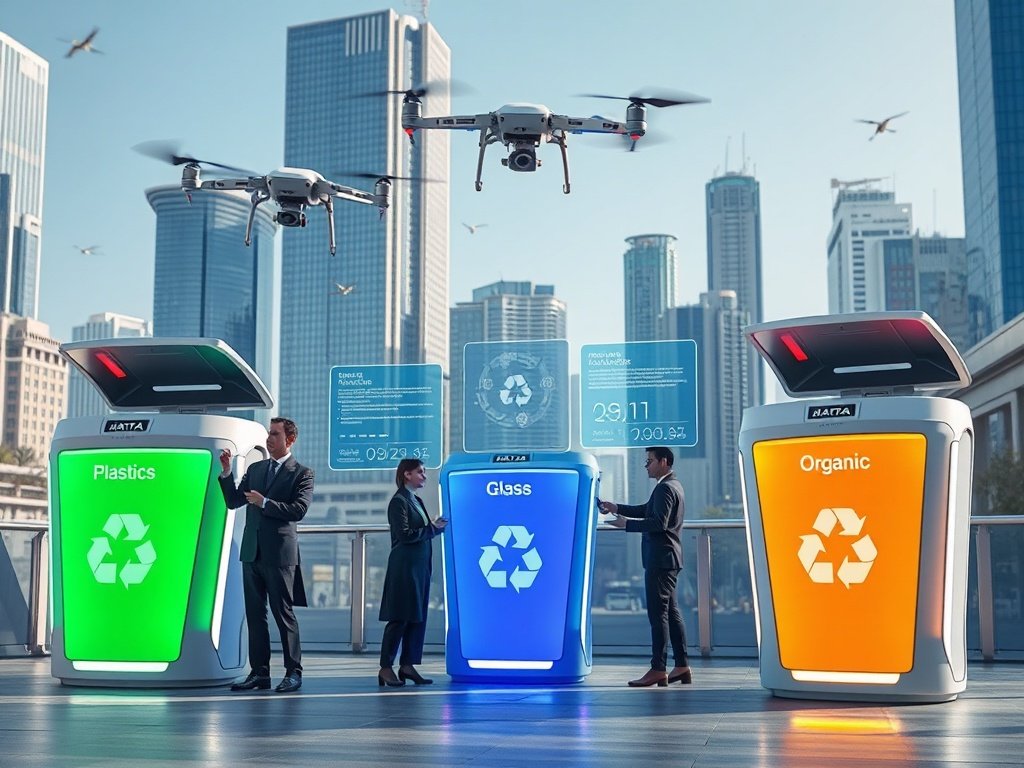
MataRecycler is an advanced AI-powered waste sorting system that identifies and separates recyclables with high accuracy. By combining machine learning, sensors, and computer vision, it automates sorting processes, reduces contamination, and improves recycling efficiency. This system helps cities and industries lower landfill waste, save labor costs, and achieve sustainable waste management goals with faster and more precise material classification.
The growing waste crisis requires innovative solutions to improve recycling efficiency. MataRecycler, powered by artificial intelligence, leverages machine learning and advanced sensor technologies to automatically sort plastics, metals, paper, and organic materials. Its automation reduces human labor, prevents contamination, and increases recycling throughput. By integrating data analytics, facilities can monitor performance and optimize operations. MataRecycler not only supports environmental sustainability but also enhances economic efficiency by producing high-quality recycled materials for reuse. With smart AI-driven sorting, municipalities and industries can achieve better recycling rates, lower carbon footprints, and move closer to a circular economy.
What Is MataRecycler and How Does It Work?
MataRecycler is a smart waste sorting system that automates the separation of recyclable materials. It combines computer vision, AI algorithms, and advanced sensors to analyze and classify items on conveyor belts in real time. The system identifies plastics, metals, paper, and other recyclables with high precision. By reducing manual labor, it minimizes human error and speeds up processing. Facilities using MataRecycler report cleaner material streams, higher recycling rates, and reduced landfill dependency. Its integration into municipal and industrial waste management is a key step toward more efficient and sustainable recycling practices.
The Growing Need for Automated Recycling Solutions
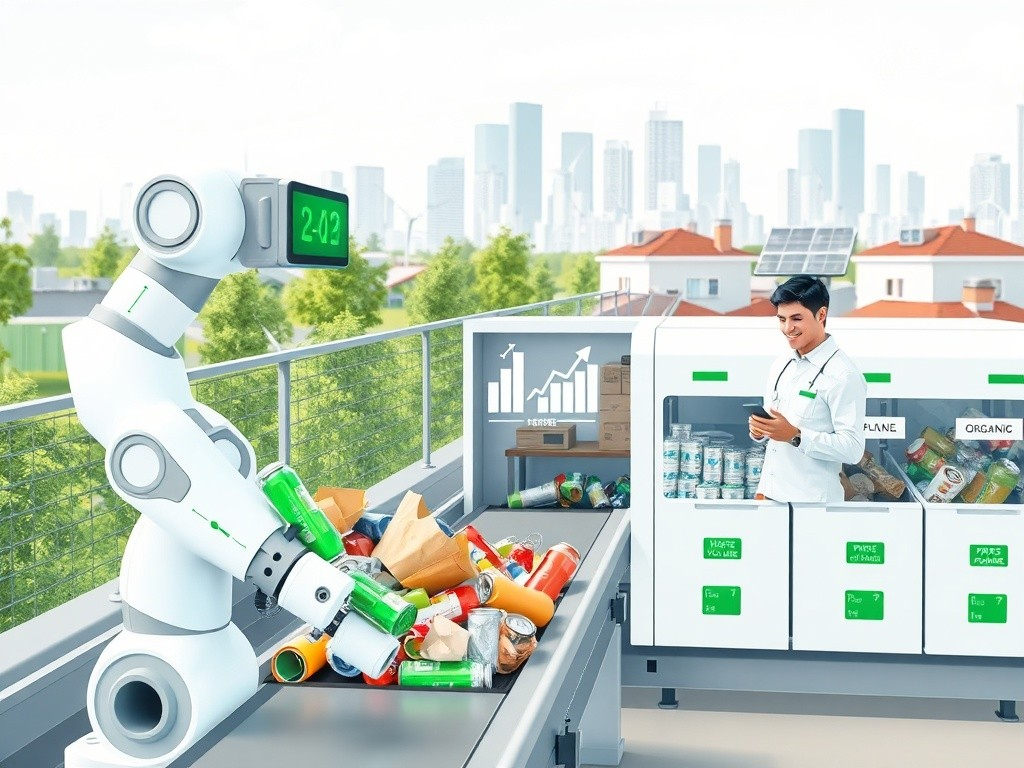
Rising waste generation in urban areas has put pressure on traditional recycling methods. Manual sorting is slow, error-prone, and labor-intensive, often leading to contamination. Automated AI-driven systems like MataRecycler address these challenges by processing large volumes efficiently. They enable facilities to manage mixed waste streams with precision, minimizing errors and operational delays. Additionally, automated sorting reduces exposure to hazardous materials for workers. Communities adopting intelligent recycling technologies experience higher diversion rates, lower environmental impact, and smoother operations, making these solutions essential for modern, sustainable waste management.
How AI Enhances Waste Sorting Accuracy
Machine learning models power MataRecycler’s ability to classify items accurately. These models are trained on vast datasets of recyclable materials, allowing the system to distinguish subtle differences in shape, color, and texture. Over time, the AI improves its recognition capabilities, even adapting to new packaging designs or materials. This reduces contamination in recycled streams and ensures higher quality output for reuse. With AI-driven decision-making, sorting speed is significantly improved, making the system more efficient than traditional methods while maintaining consistent precision across large-scale operations.
Sensor Technologies Behind MataRecycler
MataRecycler uses multiple sensor technologies, including optical cameras, near-infrared (NIR) scanners, and laser systems. Each sensor collects detailed information about items moving along the conveyor. The system processes this data in real time to classify materials and determine their proper sorting path. Multi-sensor integration ensures reliability, even for complex or layered materials. This combination of sensors and AI algorithms allows facilities to handle mixed or difficult-to-sort waste streams efficiently, reducing errors and maximizing recyclable material recovery.
Reducing Contamination in Recyclables
Contamination is one of the biggest obstacles in recycling, decreasing the quality and market value of sorted materials. MataRecycler addresses this by accurately identifying and separating non-conforming items before they enter the recycling stream. Cleaner material streams lead to higher-value recyclables and fewer rejections in processing plants. Automated sorting reduces manual handling, decreasing the likelihood of human error and operational delays. Facilities that deploy intelligent systems see a significant improvement in overall recycling performance and environmental outcomes.
Environmental Benefits of AI-Powered Sorting
AI-driven waste sorting supports sustainability by increasing the quantity and quality of materials recycled. By reducing landfill waste, these systems lower methane emissions and other environmental hazards associated with decomposing materials. Efficient sorting ensures more items are recovered for reuse, contributing to a circular economy. MataRecycler and similar technologies minimize resource extraction and energy consumption in producing new materials. Cleaner, automated recycling streams reduce overall ecological impact, helping municipalities and industries meet environmental compliance and sustainability targets.
Economic Advantages for Recycling Facilities
Although implementing AI sorting systems requires upfront investment, long-term cost benefits are significant. Facilities experience lower labor costs, fewer errors, and faster processing. Higher-quality recyclables generate better revenue in secondary markets. Improved operational efficiency reduces downtime and maintenance costs. Additionally, government incentives for sustainable technologies may offset initial expenditures. Over time, MataRecycler pays for itself through operational savings, increased material recovery, and enhanced revenue streams, making it a cost-effective solution for modern recycling facilities.
Also read this: CNLawBlog Revolutionizes Legal Insights: Shaping Online Law Discourse Today
Real-World Applications and Success Stories
MataRecycler has been deployed in both municipal and industrial settings worldwide. Cities use it to manage large volumes of household and commercial waste, while industrial facilities employ it to sort packaging and manufacturing byproducts. Reports indicate faster processing times, reduced labor requirements, and higher material purity. Facilities also achieve lower landfill dependency and improved sustainability metrics. These real-world applications demonstrate that AI-powered sorting is not theoretical—it provides measurable improvements in recycling efficiency and environmental impact.
Integrating Data Analytics With Sorting Operations
MataRecycler includes analytics dashboards that provide real-time insights into sorting performance. Managers can track throughput rates, error patterns, and material composition. Data-driven insights allow optimization of sorting processes and resource allocation. Analytics also enable predictive maintenance, preventing costly downtime. By monitoring operational trends, facilities can respond to seasonal variations or changes in waste composition. Integration of analytics ensures that AI sorting systems remain efficient, scalable, and aligned with operational and sustainability goals.
Worker Safety and Automation Benefits
Automated sorting reduces human contact with hazardous or heavy waste, minimizing injury risks. Workers focus on system supervision, monitoring quality, and managing data dashboards rather than physically handling dangerous materials. This shift improves workplace safety and overall operational efficiency. Additionally, automation helps reduce worker fatigue and increases morale. Facilities implementing AI sorting create safer, more ergonomic environments while maintaining high processing standards and sustainable operations.
Supporting Circular Economy Initiatives
MataRecycler enables a circular economy by producing high-quality recycled materials suitable for reuse in manufacturing. Accurate sorting ensures purity of plastics, metals, and papers, which can be reintroduced into production lines. This reduces reliance on virgin materials, saves energy, and lowers emissions. By closing material loops, AI sorting technologies empower companies and municipalities to achieve sustainability targets, creating a more resilient and resource-efficient waste management system.
Challenges and Limitations
AI waste sorting systems face challenges, including high initial costs and technical maintenance requirements. Smaller facilities may struggle with investment or require shared infrastructure. Highly contaminated streams may still need manual pre-sorting. AI models must be updated to recognize new packaging materials. Despite these hurdles, phased implementation and proper training allow facilities to maximize benefits. With careful planning, MataRecycler can overcome limitations and provide consistent, scalable performance.
Future Trends in Smart Waste Management
Future advancements in AI sorting will include self-learning models, improved sensor technologies, and integration with robotic handling systems. Smart facilities may communicate with municipal networks to optimize collection schedules and recycling outcomes. Real-time feedback can guide consumers toward better waste separation, increasing overall recycling quality. As costs decline and technologies improve, AI-powered sorting will become the standard, helping communities worldwide achieve sustainability goals with precision, efficiency, and scalability.
Also read this: Priority Infrastructure plan 2026: Top Strategies for Sustainable Growth & Smart Investment
How MataRecycler Transforms Waste Management
By combining AI, sensors, and data analytics, MataRecycler revolutionizes traditional recycling. It reduces human error, increases material purity, and boosts throughput. Facilities using MataRecycler benefit from cleaner recyclables, lower landfill reliance, and better economic returns. The technology provides a scalable solution to growing waste challenges, supporting sustainability goals while enhancing operational efficiency. MataRecycler exemplifies the future of modern, environmentally responsible waste management.
FAQs
1. What makes MataRecycler better than manual sorting?
AI and sensors allow faster, more accurate classification of materials, reducing contamination and labor costs.
2. Can it handle all types of waste?
Yes, it sorts plastics, metals, paper, and organic materials, though highly contaminated streams may need pre-sorting.
3. Is AI sorting expensive to install?
Initial setup is costly, but operational savings and higher material value make it worthwhile.
4. How does MataRecycler support sustainability?
It increases recycling efficiency, reduces landfill waste, and lowers carbon footprint.
5. Does it replace workers?
Automation reduces manual labor but creates new roles in supervision and analytics.
6. How accurate is AI sorting?
Machine learning models provide high precision, improving over time with more data.
7. Can municipalities implement it easily?
Yes, with planning and training, it integrates into both municipal and industrial systems.MataRecycler is an advanced AI-powered waste sorting system that identifies and separates recyclables with high accuracy. By combining machine learning, sensors, and computer vision, it automates sorting processes, reduces contamination, and improves recycling efficiency. This system helps cities and industries lower landfill waste, save labor costs, and achieve sustainable waste management goals with faster and more precise material classification.
The growing waste crisis requires innovative solutions to improve recycling efficiency. MataRecycler, powered by artificial intelligence, leverages machine learning and advanced sensor technologies to automatically sort plastics, metals, paper, and organic materials. Its automation reduces human labor, prevents contamination, and increases recycling throughput. By integrating data analytics, facilities can monitor performance and optimize operations. MataRecycler not only supports environmental sustainability but also enhances economic efficiency by producing high-quality recycled materials for reuse. With smart AI-driven sorting, municipalities and industries can achieve better recycling rates, lower carbon footprints, and move closer to a circular economy.
Meta Description (150–160 characters)
Discover MataRecycler: AI-powered sustainable waste sorting system that improves recycling efficiency, reduces contamination, and supports greener waste management.
What Is MataRecycler and How Does It Work?
MataRecycler is a smart waste sorting system that automates the separation of recyclable materials. It combines computer vision, AI algorithms, and advanced sensors to analyze and classify items on conveyor belts in real time. The system identifies plastics, metals, paper, and other recyclables with high precision. By reducing manual labor, it minimizes human error and speeds up processing. Facilities using MataRecycler report cleaner material streams, higher recycling rates, and reduced landfill dependency. Its integration into municipal and industrial waste management is a key step toward more efficient and sustainable recycling practices.
The Growing Need for Automated Recycling Solutions
Rising waste generation in urban areas has put pressure on traditional recycling methods. Manual sorting is slow, error-prone, and labor-intensive, often leading to contamination. Automated AI-driven systems like MataRecycler address these challenges by processing large volumes efficiently. They enable facilities to manage mixed waste streams with precision, minimizing errors and operational delays. Additionally, automated sorting reduces exposure to hazardous materials for workers. Communities adopting intelligent recycling technologies experience higher diversion rates, lower environmental impact, and smoother operations, making these solutions essential for modern, sustainable waste management.
How AI Enhances Waste Sorting Accuracy
Machine learning models power MataRecycler’s ability to classify items accurately. These models are trained on vast datasets of recyclable materials, allowing the system to distinguish subtle differences in shape, color, and texture. Over time, the AI improves its recognition capabilities, even adapting to new packaging designs or materials. This reduces contamination in recycled streams and ensures higher quality output for reuse. With AI-driven decision-making, sorting speed is significantly improved, making the system more efficient than traditional methods while maintaining consistent precision across large-scale operations.
Sensor Technologies Behind MataRecycler
MataRecycler uses multiple sensor technologies, including optical cameras, near-infrared (NIR) scanners, and laser systems. Each sensor collects detailed information about items moving along the conveyor. The system processes this data in real time to classify materials and determine their proper sorting path. Multi-sensor integration ensures reliability, even for complex or layered materials. This combination of sensors and AI algorithms allows facilities to handle mixed or difficult-to-sort waste streams efficiently, reducing errors and maximizing recyclable material recovery.
Reducing Contamination in Recyclables
Contamination is one of the biggest obstacles in recycling, decreasing the quality and market value of sorted materials. MataRecycler addresses this by accurately identifying and separating non-conforming items before they enter the recycling stream. Cleaner material streams lead to higher-value recyclables and fewer rejections in processing plants. Automated sorting reduces manual handling, decreasing the likelihood of human error and operational delays. Facilities that deploy intelligent systems see a significant improvement in overall recycling performance and environmental outcomes.
Environmental Benefits of AI-Powered Sorting
AI-driven waste sorting supports sustainability by increasing the quantity and quality of materials recycled. By reducing landfill waste, these systems lower methane emissions and other environmental hazards associated with decomposing materials. Efficient sorting ensures more items are recovered for reuse, contributing to a circular economy. MataRecycler and similar technologies minimize resource extraction and energy consumption in producing new materials. Cleaner, automated recycling streams reduce overall ecological impact, helping municipalities and industries meet environmental compliance and sustainability targets.
Economic Advantages for Recycling Facilities
Although implementing AI sorting systems requires upfront investment, long-term cost benefits are significant. Facilities experience lower labor costs, fewer errors, and faster processing. Higher-quality recyclables generate better revenue in secondary markets. Improved operational efficiency reduces downtime and maintenance costs. Additionally, government incentives for sustainable technologies may offset initial expenditures. Over time, MataRecycler pays for itself through operational savings, increased material recovery, and enhanced revenue streams, making it a cost-effective solution for modern recycling facilities.
Real-World Applications and Success Stories
MataRecycler has been deployed in both municipal and industrial settings worldwide. Cities use it to manage large volumes of household and commercial waste, while industrial facilities employ it to sort packaging and manufacturing byproducts. Reports indicate faster processing times, reduced labor requirements, and higher material purity. Facilities also achieve lower landfill dependency and improved sustainability metrics. These real-world applications demonstrate that AI-powered sorting is not theoretical—it provides measurable improvements in recycling efficiency and environmental impact.
Integrating Data Analytics With Sorting Operations
MataRecycler includes analytics dashboards that provide real-time insights into sorting performance. Managers can track throughput rates, error patterns, and material composition. Data-driven insights allow optimization of sorting processes and resource allocation. Analytics also enable predictive maintenance, preventing costly downtime. By monitoring operational trends, facilities can respond to seasonal variations or changes in waste composition. Integration of analytics ensures that AI sorting systems remain efficient, scalable, and aligned with operational and sustainability goals.
Worker Safety and Automation Benefits
Automated sorting reduces human contact with hazardous or heavy waste, minimizing injury risks. Workers focus on system supervision, monitoring quality, and managing data dashboards rather than physically handling dangerous materials. This shift improves workplace safety and overall operational efficiency. Additionally, automation helps reduce worker fatigue and increases morale. Facilities implementing AI sorting create safer, more ergonomic environments while maintaining high processing standards and sustainable operations.
Supporting Circular Economy Initiatives
MataRecycler enables a circular economy by producing high-quality recycled materials suitable for reuse in manufacturing. Accurate sorting ensures purity of plastics, metals, and papers, which can be reintroduced into production lines. This reduces reliance on virgin materials, saves energy, and lowers emissions. By closing material loops, AI sorting technologies empower companies and municipalities to achieve sustainability targets, creating a more resilient and resource-efficient waste management system.
Challenges and Limitations
AI waste sorting systems face challenges, including high initial costs and technical maintenance requirements. Smaller facilities may struggle with investment or require shared infrastructure. Highly contaminated streams may still need manual pre-sorting. AI models must be updated to recognize new packaging materials. Despite these hurdles, phased implementation and proper training allow facilities to maximize benefits. With careful planning, MataRecycler can overcome limitations and provide consistent, scalable performance.
Future Trends in Smart Waste Management
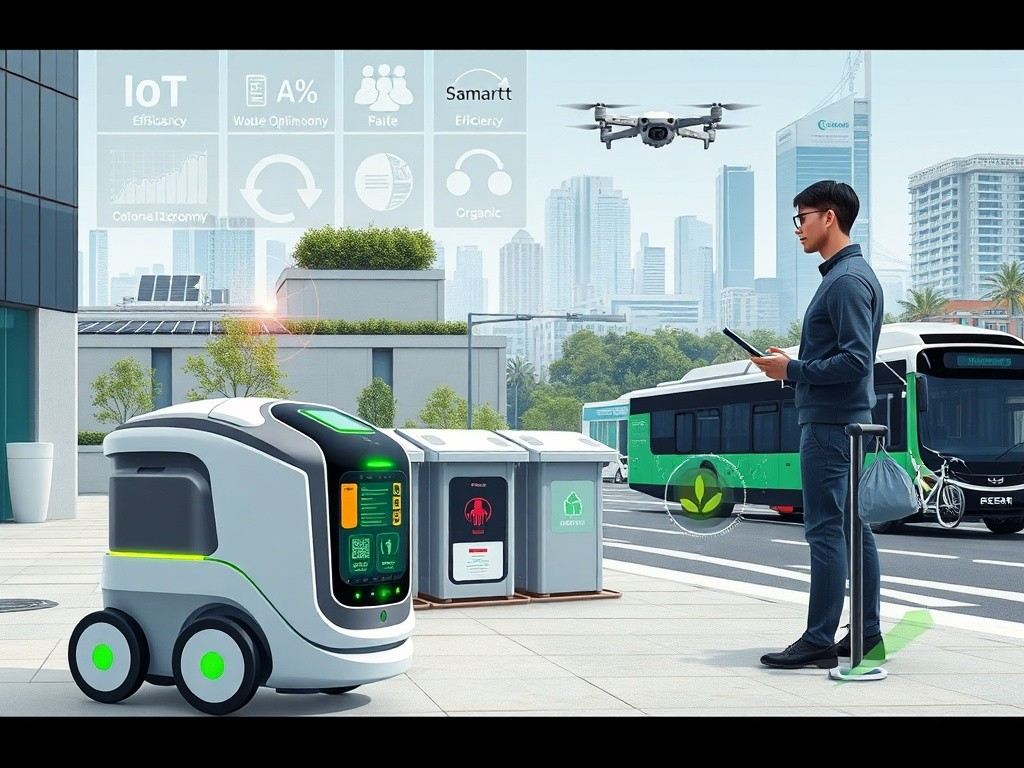
Future advancements in AI sorting will include self-learning models, improved sensor technologies, and integration with robotic handling systems. Smart facilities may communicate with municipal networks to optimize collection schedules and recycling outcomes. Real-time feedback can guide consumers toward better waste separation, increasing overall recycling quality. As costs decline and technologies improve, AI-powered sorting will become the standard, helping communities worldwide achieve sustainability goals with precision, efficiency, and scalability.
How MataRecycler Transforms Waste Management
By combining AI, sensors, and data analytics, MataRecycler revolutionizes traditional recycling. It reduces human error, increases material purity, and boosts throughput. Facilities using MataRecycler benefit from cleaner recyclables, lower landfill reliance, and better economic returns. The technology provides a scalable solution to growing waste challenges, supporting sustainability goals while enhancing operational efficiency. MataRecycler exemplifies the future of modern, environmentally responsible waste management.
FAQs
1. What makes MataRecycler better than manual sorting?
AI and sensors allow faster, more accurate classification of materials, reducing contamination and labor costs.
2. Can it handle all types of waste?
Yes, it sorts plastics, metals, paper, and organic materials, though highly contaminated streams may need pre-sorting.
3. Is AI sorting expensive to install?
Initial setup is costly, but operational savings and higher material value make it worthwhile.
4. How does MataRecycler support sustainability?
It increases recycling efficiency, reduces landfill waste, and lowers carbon footprint.
5. Does it replace workers?
Automation reduces manual labor but creates new roles in supervision and analytics.
6. How accurate is AI sorting?
Machine learning models provide high precision, improving over time with more data.
7. Can municipalities implement it easily?
Yes, with planning and training, it integrates into both municipal and industrial systems.
For more info: techmaginsider.com
