
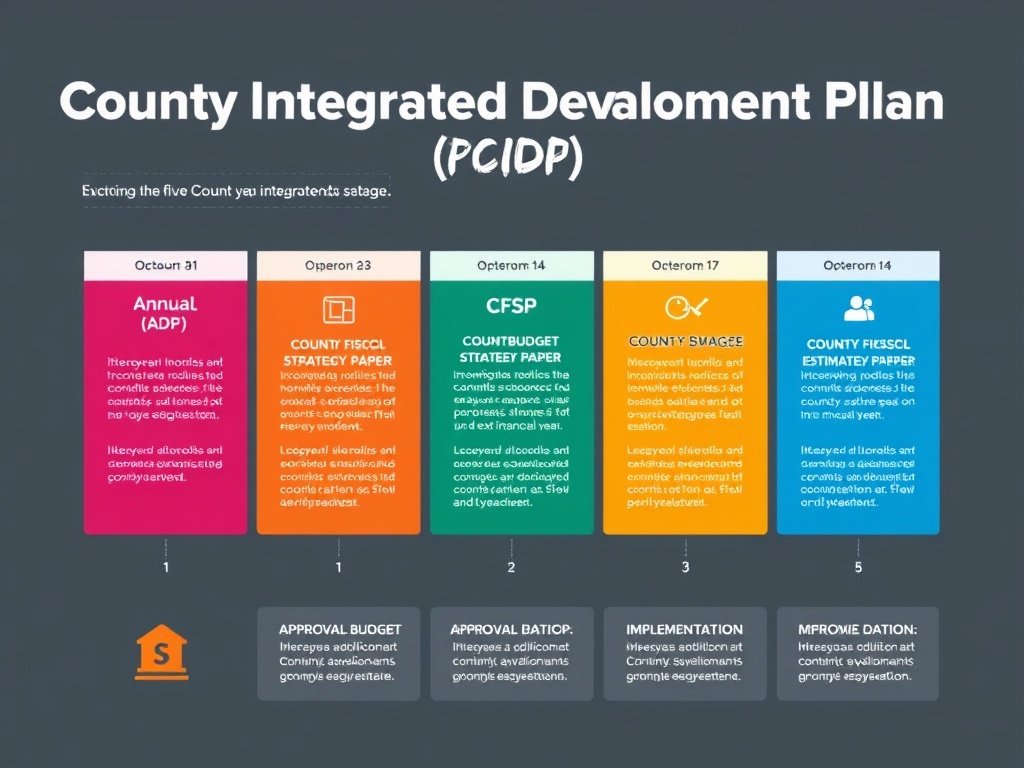
A county integrated development plan is a five-year strategic planning document prepared by a county government to guide development priorities, budgeting, and service delivery. It outlines goals, projects, policies, and resource allocation strategies to improve infrastructure, health, education, agriculture, and economic growth while ensuring public participation and sustainable development.
Understanding what is county integrated development plan helps citizens, leaders, and investors see how local governments plan for growth and service delivery. This comprehensive guide explains its purpose, structure, legal foundation, budgeting process, community involvement, and long-term impact. You will learn how development priorities are selected, how funds are allocated, and why transparency and accountability matter. Whether you are a student, policymaker, entrepreneur, or engaged citizen, this article simplifies complex planning processes into practical insights. By the end, you will clearly understand how counties transform community needs into structured development programs that drive sustainable progress.
Understanding the Meaning and Core Concept Behind County Integrated Development Planning
To understand what is county integrated development plan, it is important to first explore the concept of integrated planning at the local government level. A county integrated development plan is a strategic document that outlines a county’s vision, priorities, and planned projects over a five-year period. It connects community needs with government policies and available resources. The plan ensures that development efforts are coordinated rather than random. By aligning infrastructure, social services, and economic programs, counties create a clear roadmap for sustainable growth and improved service delivery for residents.
Legal and Policy Framework Supporting County Development Planning Systems
County development planning does not happen in isolation but is anchored in constitutional and legislative frameworks that define governance structures. Many countries that practice devolved governance require counties to prepare medium-term development plans to guide budgeting and policy decisions. These laws promote transparency, accountability, and citizen participation. The legal framework ensures that development priorities reflect public interest rather than political promises alone. It also requires periodic review and approval processes to maintain compliance. This legal backing strengthens planning credibility and ensures structured, long-term development rather than short-term, uncoordinated initiatives.
Vision Setting and Strategic Objectives That Guide County Growth
Every county integrated development plan begins with a long-term vision that reflects the aspirations of the community. This vision describes where the county wants to be in the future in terms of economic development, infrastructure, healthcare, education, and environmental sustainability. Strategic objectives are then developed to translate that vision into measurable goals. These objectives guide decision-making across departments and sectors. By defining clear targets and outcomes, county governments create a focused development approach. This structured vision-setting process prevents duplication of efforts and ensures that resources are directed toward impactful projects.
Sectoral Priorities Including Health, Education, Agriculture, and Infrastructure
A strong development plan identifies sectoral priorities that address essential community needs. Counties typically focus on improving healthcare systems, expanding educational opportunities, modernizing agricultural practices, and developing road networks and water systems. These sectors are interconnected, and progress in one often supports growth in others. For example, better roads enhance market access for farmers, while improved healthcare strengthens workforce productivity. By integrating sectoral priorities, counties ensure balanced development. The plan also considers social protection programs and youth empowerment initiatives to promote inclusive growth across all population groups.
Public Participation and Community Engagement in Development Planning
Public participation is a cornerstone of integrated county planning. Community members are invited to share their concerns, suggestions, and development priorities through forums, consultations, and surveys. This participatory approach ensures that the plan reflects real community needs rather than assumptions made by officials. It also builds trust between citizens and local government. When residents feel involved in decision-making, they are more likely to support and monitor development projects. Public engagement strengthens accountability and enhances the relevance and effectiveness of implemented programs across various sectors.
Resource Allocation and Budget Alignment With Development Objectives
An integrated development plan directly influences the county’s budgeting process. Projects identified in the plan are prioritized during annual budget preparation to ensure funds are allocated strategically. Financial planning considers available revenue, grants, and external funding sources. By aligning budgets with development objectives, counties avoid misallocation of resources and reduce wasteful spending. This systematic approach enhances financial discipline and promotes efficient project implementation. Clear linkage between planning and budgeting ensures that development commitments are realistic and achievable within the county’s fiscal capacity.
Also read this: Axelanote Complete Guide to Features, Benefits, and Productivity Mastery
Monitoring, Evaluation, and Performance Measurement Mechanisms
Effective implementation requires strong monitoring and evaluation systems. Counties establish performance indicators to measure progress toward set objectives. Regular reporting and reviews help identify challenges and adjust strategies where necessary. Monitoring ensures that projects are completed on time and within budget. Evaluation also measures impact on community welfare and economic growth. By tracking performance, county governments maintain accountability and improve transparency. Continuous assessment strengthens learning and helps refine future development strategies. This structured evaluation process ensures long-term sustainability and effective use of public resources.
Economic Development and Investment Promotion Strategies in Counties
Integrated planning supports economic growth by identifying key investment opportunities within a county. Local governments analyze sectors such as tourism, manufacturing, agriculture, and trade to stimulate job creation and revenue generation. Strategic initiatives may include business incubation programs, infrastructure upgrades, and regulatory reforms to attract investors. Economic development strategies align with the broader county vision and community priorities. By fostering a supportive business environment, counties enhance competitiveness and stimulate sustainable economic transformation that benefits both local entrepreneurs and external investors.
Environmental Sustainability and Climate Resilience Planning Considerations
Modern development planning incorporates environmental sustainability to protect natural resources and address climate risks. Counties assess environmental challenges such as deforestation, water scarcity, and pollution. Strategies may include renewable energy promotion, conservation initiatives, and climate adaptation measures. Sustainable planning ensures that development projects do not harm ecosystems or future generations. Integrating environmental considerations strengthens resilience against disasters and changing weather patterns. By balancing growth with environmental stewardship, counties promote long-term stability and sustainable livelihoods for their communities.
Social Inclusion, Equity, and Support for Vulnerable Populations
A comprehensive development framework emphasizes inclusivity and social equity. Counties identify vulnerable groups, including women, youth, persons with disabilities, and marginalized communities. Targeted programs aim to reduce inequality and improve access to essential services. Social inclusion ensures that development benefits are shared equitably across the population. Policies may focus on education access, healthcare affordability, and economic empowerment initiatives. By prioritizing inclusive development, counties foster social cohesion and reduce disparities, creating stronger and more resilient communities.
Institutional Coordination and Interdepartmental Collaboration Mechanisms
Integrated development planning requires collaboration among various county departments and agencies. Health, education, infrastructure, finance, and agriculture departments must work together to achieve shared objectives. Institutional coordination prevents duplication of efforts and enhances efficiency. Clear communication channels and defined roles strengthen accountability. Collaboration also facilitates data sharing and unified reporting systems. By promoting teamwork within government structures, counties enhance service delivery and ensure cohesive implementation of development programs across different sectors.
Also read this: Awius Meaning, Uses, Benefits and Complete Guide You Must Know Today
Technology, Data Management, and Evidence-Based Decision Making
Modern planning relies heavily on data analysis and digital systems. Counties collect demographic, economic, and social data to inform decision-making. Geographic information systems and performance dashboards enhance transparency and tracking. Evidence-based planning reduces guesswork and improves project prioritization. Technology also supports public participation through digital platforms and feedback systems. By leveraging data and innovation, counties improve efficiency, responsiveness, and service quality. Reliable information strengthens policy formulation and ensures development strategies are grounded in factual evidence.
Challenges Faced During Implementation and Practical Solutions
Despite its importance, implementation often faces challenges such as limited funding, political interference, and capacity gaps. Delays in project execution may occur due to procurement issues or administrative inefficiencies. Counties address these challenges by strengthening institutional capacity, improving financial management, and enhancing oversight mechanisms. Continuous stakeholder engagement also mitigates resistance and builds consensus. By proactively identifying risks and applying practical solutions, counties improve the effectiveness of development initiatives and maintain public confidence in governance processes.
Transparency, Accountability, and Governance Standards in Development Planning
Strong governance principles underpin successful county planning systems. Transparency involves sharing information about projects, budgets, and performance results with the public. Accountability ensures that leaders and officials are responsible for delivering promised outcomes. Anti-corruption measures and public audits strengthen trust in local government. Good governance promotes ethical leadership and responsible resource management. By upholding these standards, counties create a stable environment for sustainable development and encourage active civic participation in monitoring progress.
Conclusion: Why Integrated County Planning Drives Sustainable Local Development
Understanding what is county integrated development plan reveals its critical role in shaping structured, inclusive, and sustainable local growth. It provides a strategic roadmap that connects community aspirations with government action and financial planning. Through legal backing, public participation, budget alignment, and performance monitoring, counties ensure coordinated progress across sectors. Integrated planning promotes transparency, economic growth, environmental sustainability, and social equity. When effectively implemented, it transforms development from scattered projects into a cohesive strategy that delivers measurable improvements in citizens’ quality of life.
FAQs
What is the main purpose of a county integrated development plan?
Its main purpose is to guide county development priorities, budgeting, and service delivery over a five-year period in a coordinated and strategic manner.
How long does a county integrated development plan last?
Most county development plans cover a five-year cycle aligned with government planning and budgeting frameworks.
Why is public participation important in county planning?
Public participation ensures development priorities reflect real community needs and promotes transparency and accountability.
How does the plan affect annual county budgets?
Projects identified in the plan are prioritized during annual budgeting to ensure funds align with strategic development objectives.
Who prepares the county development plan?
County government departments prepare the plan with input from stakeholders, experts, and community members.
What sectors are commonly included in county development planning?
Common sectors include health, education, agriculture, infrastructure, trade, environment, and social services.
How is performance measured during implementation?
Counties use monitoring and evaluation frameworks with clear indicators to track progress and assess project impact.
For more info: techmaginsider.com
