
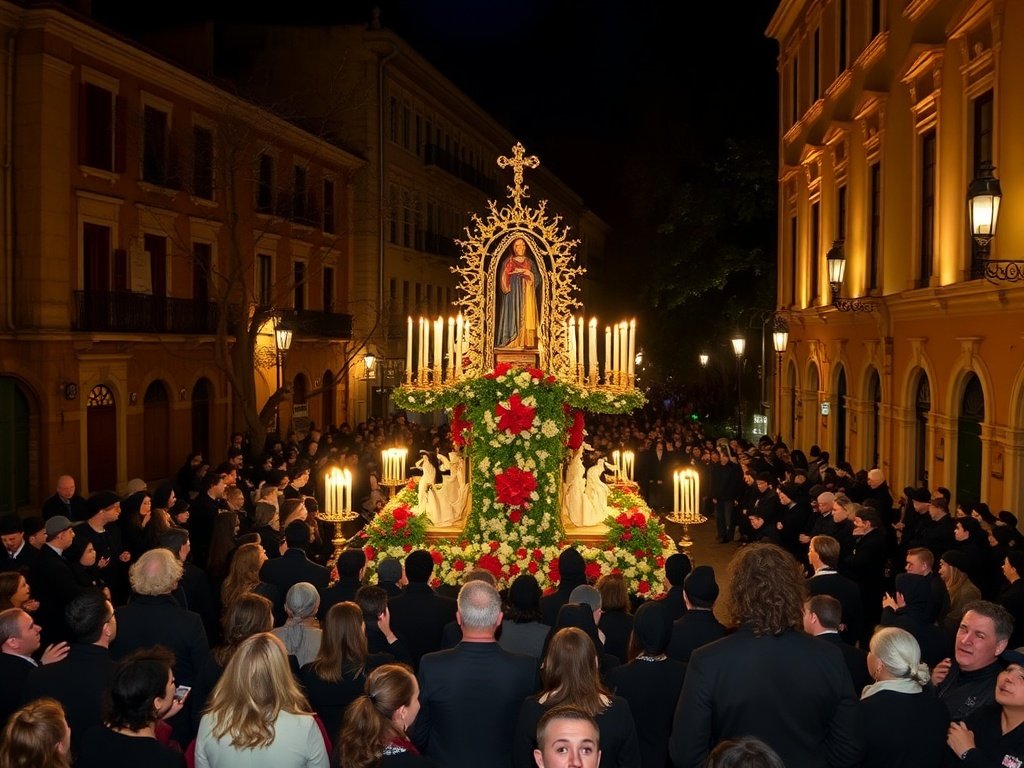
Semana Santa 2025 will be observed from April 13 to April 20, 2025, beginning on Palm Sunday and ending on Easter Sunday. It is the Christian Holy Week commemorating the Passion, death, and resurrection of Jesus Christ. Celebrated widely in Spain, Latin America, and other Catholic-majority countries, it features solemn processions, church services, cultural traditions, and community gatherings.
Semana Santa 2025 marks one of the most sacred periods in the Christian calendar, observed from April 13 to April 20. Known as Holy Week, it honors the final days of Jesus Christ’s life, including his crucifixion and resurrection. Countries such as Spain, Mexico, the Philippines, and Guatemala hold elaborate processions, dramatic reenactments, and religious ceremonies. The week blends deep spiritual reflection with rich cultural heritage, attracting both pilgrims and international tourists. From Palm Sunday to Easter Sunday, each day carries unique religious importance. This complete guide explains the meaning, official dates, traditions, and global significance of this powerful annual observance.
Historical Background of Holy Week
Origins in Early Christianity
Holy Week traces its roots to the earliest centuries of Christianity, when believers began commemorating the final days of Jesus Christ’s earthly ministry. By the fourth century, structured observances had developed in Jerusalem, marking significant biblical events. Pilgrims documented ceremonies that later influenced Christian liturgy worldwide. Over time, these observances spread across Europe and eventually to Latin America through Spanish and Portuguese colonization. The traditions evolved uniquely in each region while maintaining the central biblical narrative. Today, the historical depth of Holy Week reflects centuries of faith, adaptation, and cultural blending. Understanding its origins helps explain why communities continue to preserve rituals that are both sacred and symbolic, linking modern believers with ancient Christian practices.
Meaning and Spiritual Significance
Why This Week Matters to Christians
Holy Week represents sacrifice, redemption, forgiveness, and hope. It commemorates the Passion of Christ—his suffering, crucifixion, and ultimate resurrection. For Christians, this period encourages repentance, prayer, fasting, and reflection. The resurrection on Easter Sunday symbolizes victory over sin and death, forming the foundation of Christian faith. Beyond doctrine, the week inspires personal renewal and spiritual growth. Many believers attend additional church services and participate in confession or charity work. The spiritual focus remains consistent worldwide, even when cultural expressions differ. This blend of theology and lived faith makes the observance deeply meaningful across denominations and continents.
Official Dates and Holy Week Calendar in 2025
Day-by-Day Breakdown
In 2025, Holy Week begins on April 13 (Palm Sunday) and concludes on April 20 (Easter Sunday). Key days include Holy Thursday, commemorating the Last Supper; Good Friday, marking the crucifixion; and Holy Saturday, a day of quiet reflection. Each day holds liturgical importance in churches around the world. Services often increase in frequency during this period, with special readings and symbolic rituals. The calendar is based on the lunar cycle, which determines Easter’s changing date each year. Understanding the schedule helps travelers, pilgrims, and families plan participation in ceremonies and events with greater clarity.
Palm Sunday Traditions
Symbolism of Palms and Processions
Palm Sunday marks Jesus’ entry into Jerusalem, where crowds welcomed him with palm branches. Churches distribute blessed palms to congregants, symbolizing peace and victory. In many countries, public processions reenact the biblical event with music and prayers. The day sets a solemn yet celebratory tone for the week ahead. Families often keep palm leaves in their homes as spiritual reminders throughout the year. While customs vary globally, the central message of humility and faith remains unchanged. This opening day connects believers emotionally to the events leading toward the crucifixion and resurrection.
Holy Thursday Observances
The Last Supper Commemoration
Holy Thursday honors the Last Supper, when Jesus shared bread and wine with his disciples. Churches hold evening Masses that include the washing of feet, symbolizing humility and service. This powerful ritual reflects Jesus’ example of servant leadership. Many congregations remain in prayer late into the night. The day emphasizes themes of love, sacrifice, and unity. In some regions, communities visit multiple churches in a tradition known as the “Seven Churches Visitation.” These practices deepen spiritual reflection and strengthen communal bonds during the most sacred days of the Christian year.
Good Friday Ceremonies
A Day of Mourning and Reflection
Good Friday commemorates the crucifixion of Jesus Christ. It is observed with fasting, silence, and solemn church services. Many communities stage reenactments of the Stations of the Cross, depicting the journey to Calvary. Churches often dim lights and remove decorative elements to reflect mourning. Despite its sorrowful tone, the day reinforces faith in redemption. Believers meditate on themes of sacrifice and forgiveness. Across cultures, Good Friday remains one of the most emotionally powerful moments of the Christian calendar, drawing large gatherings for prayer and reflection.
Holy Saturday and the Easter Vigil
Anticipation of Resurrection
Holy Saturday is a quiet day symbolizing the time Jesus lay in the tomb. Churches prepare for the Easter Vigil held after sunset. The vigil begins in darkness, followed by the lighting of the Paschal candle representing Christ as the light of the world. Scripture readings recount salvation history before joyful celebrations begin. This transition from sorrow to hope captures the emotional journey of Holy Week. Communities gather in anticipation, marking the turning point from grief to celebration.
Also read this: Alexander savin the flying elephant memoirs of an olympic champion
Easter Sunday Celebrations
Joyful Conclusion of the Week
Easter Sunday celebrates the resurrection of Jesus Christ. Churches are filled with flowers, music, and joyful worship. Families gather for festive meals and community events. The message centers on renewal and eternal hope. Across continents, this day marks spiritual victory and new beginnings. It is considered the most important celebration in Christianity, concluding the sacred journey of the week.
Celebrations in Spain
Processions and Brotherhoods
Spain is globally renowned for elaborate Holy Week processions organized by religious brotherhoods. Cities like Seville and Malaga host dramatic parades featuring ornate floats and traditional music. Participants wear symbolic robes and carry statues depicting biblical scenes. These events attract international visitors and preserve centuries-old customs. The atmosphere blends devotion, artistry, and civic pride.
Observances in Latin America
Cultural and Religious Fusion
Countries such as Mexico and Guatemala combine indigenous traditions with Catholic rituals. Streets are decorated with colorful sawdust carpets, and entire towns participate in reenactments. These celebrations reflect deep community involvement and artistic expression. The blend of faith and culture creates visually striking and spiritually moving experiences.
Holy Week in the Philippines
Devotion and Public Participation
In the Philippines, millions participate in church services and public reenactments. Some communities stage Passion plays that draw global attention. Families often travel to provinces to observe traditions together. The week emphasizes sacrifice, repentance, and family unity, reflecting strong Catholic heritage.
Global Tourism and Economic Impact
Religious Travel and Cultural Events
Holy Week significantly boosts tourism in many countries. Hotels, restaurants, and local artisans benefit from increased visitors. Major cities prepare months in advance for processions and festivals. While rooted in faith, the observance also plays a role in cultural preservation and economic growth.
Modern Relevance in Contemporary Society
Faith in a Changing World
Even in increasingly secular societies, Holy Week remains culturally significant. Social media broadcasts processions worldwide, expanding global awareness. Many people, regardless of religious practice, attend events for cultural appreciation. The week continues to unite communities across generations.
Differences Between Catholic and Protestant Observances
Liturgical Variations
While Catholics emphasize elaborate rituals and processions, many Protestant denominations focus on scripture readings and sermons. Both traditions center on Christ’s sacrifice and resurrection but express devotion differently. These variations highlight Christianity’s diversity while preserving shared beliefs.
Preparing Spiritually and Practically
How Families Can Participate
Families prepare by attending church, volunteering, fasting, or organizing gatherings. Planning ahead ensures meaningful participation in services and community events. Many also use the week for charitable acts, reinforcing spiritual values in practical ways.
Conclusion
Semana Santa 2025 offers a profound opportunity for spiritual reflection, cultural appreciation, and global unity. From solemn processions to joyful Easter celebrations, the week bridges history, faith, and community life across continents.
FAQs
1. When is Semana Santa 2025?
It will be observed from April 13 to April 20, 2025.
2. What does Semana Santa mean?
It means “Holy Week” in Spanish and commemorates the Passion and resurrection of Jesus Christ.
3. Why is Good Friday important?
It marks the crucifixion of Jesus and emphasizes sacrifice and redemption.
4. Which countries celebrate it most prominently?
Spain, Mexico, Guatemala, and the Philippines are widely known for major celebrations.
5. Is it a public holiday?
In many Christian-majority countries, certain days during Holy Week are official public holidays.
6. How is Easter Sunday connected?
Easter Sunday concludes Holy Week by celebrating the resurrection of Jesus Christ.
7. Why do the dates change every year?
The dates depend on the lunar calendar, specifically the first full moon after the spring equinox.
For more info: techmaginsider.com
